
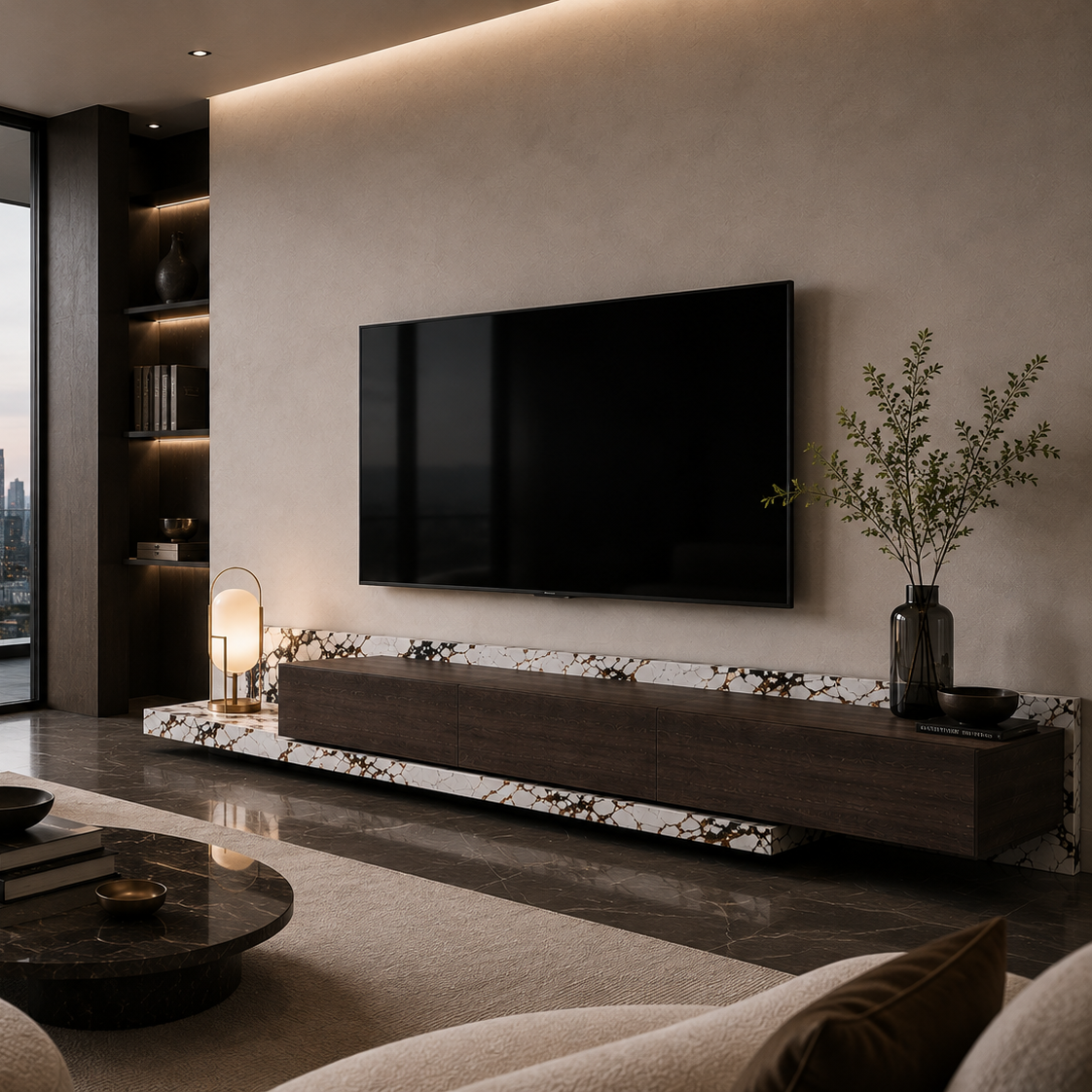
Dark wood furniture can give a pale room definition, particularly when the walls, upholstery and floor are close in tone. The challenge is deciding where that depth belongs. Choosing a dark finish for every piece at once can produce a different result from introducing one considered anchor and letting the surrounding room stay lighter. Begin by looking at the whole view from the doorway.
Choose one place for the strongest contrast
A TV unit sits along a wall and contributes a horizontal line to the room. The Oren Marble & Wood TV Unit combines natural marble and dark wood, integrated concealed storage and an asymmetric design. Its extended low-profile proportions give it a different visual role from a small occasional table.
If the room includes a dining area, the Eden Marble & Wood Round Dining Table is another possible anchor. It combines dark wood and natural marble with a sculptural mixed-material base. Decide which zone needs the most definition first; you do not need to buy both pieces to establish a coherent scheme.
Compare the furniture with the floor
Dark furniture behaves differently against pale carpet, a mid-toned timber floor or a patterned rug. Gather the room's samples and look at them together. A strong contrast may make the furniture outline clearer; a closer tonal relationship can make the base feel more integrated. Neither result is inherently more refined, so use the effect that suits the room's purpose.
Avoid selecting wood by an assumed species based on a photograph. These product descriptions establish dark wood construction, but colour alone does not identify a species or construction detail. If matching existing furniture closely matters, ask about available finish information and consider the limits of judging tone on a screen.
Repeat depth in smaller doses
Once the main piece is chosen, look for one or two opportunities to echo its darker tone away from the floor. An artwork frame, a woven textile detail or an object you already own may be enough. The repetition should help the eye travel through the room, rather than turn every shelf and surface into a matching display.
Keep some areas quiet. Plain curtains or a softly textured sofa can sit comfortably beside an expressive marble surface. If a room begins to feel crowded, remove a competing pattern before adding more pale accessories. Contrast comes from the relationship between elements; it does not require filling the space with additional objects.
Check the room after dark
Look at the arrangement with the lighting you use in the evening. A piece that feels beautifully defined in daylight may read as a deeper silhouette later. Test whether nearby lamps illuminate the room comfortably without relying on reflection from a product surface. Do not assume a finish will behave like one you have seen elsewhere.
Houzz's 2026 UK emerging-trends research includes growing interest in dark wood. Use that signal as permission to explore depth, rather than a reason to replace furniture that already works. Browse TV Units & Sideboards, then assess the strongest candidate against your actual floor, lighting and daily storage needs.

Leave a comment
This site is protected by hCaptcha and the hCaptcha Privacy Policy and Terms of Service apply.